 |
 |
The Psychology
of Terrorism and Protest |
About this Website |
Questions and Answers About Psychotherapy |
Books |
Your Hope
|
The
Terrorist
|
 ERRORIST. ERRORIST.
What sort
of mental image comes to mind when you think of a terrorist? Most persons
would likely think of men with assault rifles and bombs, men who feel so
betrayed by someone or something that they will attack anyone, even the innocent,
to get the territory or the recognition they believe is due to them. Such
is political terrorism. It is motivated by bitter hearts, and it breeds
bitterness and hatred.
|
In his movie
The Birds, Alfred Hitchcock created horror by showing us what birds
could do, but thankfully don’t do: they could viciously attack anyone
and everyone without provocation.
We humans have
the same capacity for aggression as animals, but it is fortunately contained
behind the inhibiting effect of the frontal lobe of the brain. Sometimes
this inhibition falters, as in
Tourette’s
Disorder,
when a person can involuntarily blurt out foul words. Sometimes we use alcohol
or other drugs to drown out our inhibitions so that we can feel more
“relaxed,” and then, sadly, we end up acting recklessly. And sometimes,
under the influence of group social
pressure, the inhibition can be more or less lifted entirely, to facilitate
war and other terrorist atrocities.
Considering all
this, it often seems a wonder how generally safe we are on the streets. Yet
imagine how it would be if individuals weren’t willing to restrain their
cruel and destructive impulses. In one scene of the movie Schindler’s
List, a Nazi officer, sitting at breakfast one morning on the balcony
of his luxurious house, casually picks up a rifle and randomly shoots at
inmates in the concentration camp below. All the while, his mistress lies
in their bed, flinching at every shot, covering her head with a pillow,
hearing what is occurring—indeed, knowing what is occurring—and
yet tolerating it, even desiring it, for whatever satisfaction—luxury?
prestige?—she receives from her “lover.” And so, she too is
a terrorist in her own private way. |
|
Thus not all
terrorists fight with guns and bombs, and not all terrorists fight strictly
for political gain. There are men and women in this world who are terrorists
in a more subtle sense. They fight with social disobedience. Moreover, they
might even passively support those who use more lethal violence. But they
do not fight against real enemies; with their unconscious
anger they fight against old psychological wounds from early childhood
betrayals. It wasn’t political injustice that hurt these individuals,
it was fraud—intellectual and emotional fraud. And the wounds caused
by this fraud, if not properly healed, can project a subtle rancor into the
world as subversive as the bitter heart that pulls the trigger of a
gun. |
Beginning
In
Childhood
|
Imagine a young child
growing up in a family with a cold, stern, autocratic father. The child yearns
for affection. She yearns for a father who will teach her about the world
and fill her heart with joy and wonder for the mysteries around her. And
she yearns for a father of tender compassion who will teach her how to face
pain and suffering with courage and forgiveness
and who will protect her when she becomes hurt. But instead, her real father
neglects her. He may be abusive—physically or emotionally or sexually.
He may be alcoholic. Or he may be so preoccupied with his work that he never
notices his family.
And yet, in public
life, he stands as a pillar of strength in his community, a seemingly great
and noble man.
But to his daughter
he is a fraud. |
Exposing
Fraud
|
As the child grows up,
she will unconsciously dedicate her life to exposing “fraud” in
the world. She will seek out contradictions in valued traditions, teaching
anyone who will listen to her that cherished ideals are “just myths.”
She will laugh at discipline. She will delight in disobedience. She will
attack all hypocrisy in the world with
a vengeance that is unconsciously directed against
her father. To subvert cultural institutions is to pull down the public statue
of her father and reduce him to rubble. And she may even believe in the need to
destroy herself in the process. And yet, in this
blind hatred, all she really wants deep in her heart is for her father to
love her. But the price of her desire will be destruction, unless she understands
the real basis of social fraud. |
Social
Fraud
|
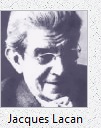
A brilliant French psychoanalyst
Jacques Lacan taught that, in psychological
terms,
 the social world is a fraud. In so far as the social
world around us places constant demands upon us as individuals, Lacan called
the social world “the Other,” and he expressed the truth of social
fraud with a profound saying: “There is no Other of the
Other.” [1]
By this he meant that all of the meaning we attribute to
our human creations, including language itself, has no value beyond its own
reference. the social world is a fraud. In so far as the social
world around us places constant demands upon us as individuals, Lacan called
the social world “the Other,” and he expressed the truth of social
fraud with a profound saying: “There is no Other of the
Other.” [1]
By this he meant that all of the meaning we attribute to
our human creations, including language itself, has no value beyond its own
reference.
Interestingly
enough, Genesis 2:19-20 essentially says the same thing when it tells the
story about God bringing the “various wild animals and various birds
of the air” to the man “to see what he would call them.” Note
that God didn’t name the animals; He simply said that “whatever
the man called each of them would be its name.” Here God gave the man
the freedom to create language, a language guaranteed only by its own
enunciation.
Now, although
Genesis speaks from the revealed religion of the Jewish tradition, and though
Lacan was not
religious [2]
and spoke from the position of secular psychology, the essential point should
be clear: no language—indeed, no human creation—has any absolute
meaning.
|
The world offers
itself to us in glamorous spectacle, but there is nothing to see, really, except
deluded celebrities gloating in the fraud of self-importance. |
|
|
• |
Advertising and
entertainment industries mesmerize us and our children into the deepest levels
of self-deception, all in the guise of making us “feel good” while we defile
human dignity. |
|
|
• |
“Progressive”
politicians don’t—and can’t—fulfill their empty promises of “hope” but instead
lead us into a corrupt wasteland of self-gratification. |
|
|
• |
Educational systems
forsake education for morally subversive political brainwashing. |
|
|
• |
News media
forsake the noble ideal of objective reporting and brazenly distribute “fake news”
and biased social propaganda. |
|
|
• |
Parents don’t know how to
parent and don’t even care that they don’t know. |
|
|
• |
Political activists use
intolerance, intimidation, and bullying of others to demand tolerance for their own
agenda. |
|
|
• |
And yes, many of us
refuse to speak the truth but instead stay within the box of social fraud, playing
its games to protect our own pride and social status. |
|
Psychology can
teach us, however, not only that our social world is a “fraud”
but also that it is possible to recognize and heal the pain we felt as children
when we experienced the world’s fraud. Psychology can teach us to speak
about those childhood wounds rather than keep them as dark
secrets hidden away within ourselves, wrapped in feelings
of victimization. Psychology can teach us to
let go of bitterness and hatred and to show compassion
and love for those secrets, in the hope of healing them, rather than getting rid of
them. But if those secrets are not healed they become our
unconscious enemies—and we become terrorists in
a battle against our own pain.
|
For just as those
who, out of hatred, defile love by committing acts of terror, so anyone who
hates those who commit political terror also defiles love. Once you
let evil infect your heart with hatred you are one step closer to letting
evil possess your soul as well.
And if you respond
to political terrorism with fear, you serve the terrorists’ very goal:
to spread fear and trauma. Thus you yourself, in an
odd psychological way, become a terrorist in your own society. |
|
So is there anything
that isn’t a fraud? Psychology, by itself, cannot say. It has a definite
limit. |
Social
Activism
|
Religion, for example, can
transcend the limits of psychology because it can point to God in whom we
can place our complete trust. There can be genuine acts of charity in the
world and genuine acts of meaningful social change, when
common love is transcended by real love.
|
A child copes
with life by trying to get others to change their behavior, so as to make
things easier for himself. Persons of mature wisdom, however, cope with life
by patiently enduring suffering for the sake of love itself: to be filled
with love and to sow seeds of that love in the world around them. |
|
It takes considerable
wisdom, therefore, to know when personal need—and
pride—are masquerading as social concern.
Look closely at some of the men and women involved in activism and protest
and wonder to what extent they are trying to further their political careers,
sell their books, and prop up their own inner feelings of insecurity—or
perhaps, just yell and shake their fists for a sweet taste of
revenge. For at its core, protest is often just
a psychological defense against unresolved emotional
wounds from childhood: frustrated by their helplessness in the face of their
parents’ hypocrisy, activists try to impose
on the world their own ideas of what
“should” be done—and they call it
“tolerance.”
|
|
You might believe
that you have moral standards to uphold in defiance of your political rivals,
but the hatred in your heart that calls for bullying, heckling, and harassment—and
rioting and arson—makes you a worse human than any of the persons you
despise. |
|
This shows that the ideology
of “social tolerance” is all a fraud and just a mask that hides deep
unconscious hate and anger. In fact,
the intolerance and hate behind the mask of tolerance is eerily similar to the Nazi
ideology such persons purport to reject.
Thus
we reach the ultimate irony that protesting the fraud of the world only makes
you part of the fraud. Using hate to protest anything only stains you with
hate.
Because many activists and terrorists use the same unethical or illegal techniques
of misinformation, lying, threats, intimidation, hatred, and bullying, only a fine
line separates terrorism from activism: the willingness to kill.
|
The more you
want, the more reason you have to deceive. Therefore, all that speaks from
the place of pride is a lie. The less you want—and the greater your
humility—the less reason you have to deceive. Therefore, all that comes
from real love is truth.
To love is to
be giving, and to be giving is to act with patience, kindness, mercy, compassion,
understanding, and, ultimately, forgiveness. Activists,
by definition, don’t love—they demand, and they do it with
intolerance and hatred for anyone who disagrees with their agenda.
And so we have
to accept the fact that peace cannot be attained through protest or terrorism.
The only path to peace is through the
purification of your own heart—and that is a matter
of religion. |
|
It can occur
that persons who teach the principles of real peace will be persecuted by
those who have too much to lose by listening to the truth. To die, if necessary,
under such persecution is martyrdom. Martyrs proclaim their refusal
to hate, for in blessing even those who persecute them they keep open the
hope that the persecutors may repent their mistakes. And this explains why
no one who is killed for his or her political opposition to rivals, who is
killed in the act of killing others, or who commits suicide—by itself
or in the course of killing others—can be a martyr, for all these acts
psychologically foreclose all possibility of forgiveness and
healing.
It’s
just a shame that so many persons, even many who call themselves religious,
who haven’t learned their psychological lessons about loving (and that
includes praying for and forgiving)
their enemies—rather than hating them, suing them, protesting them,
and getting rid of them—become terrorists in their own hearts, in their
own communities, and, ultimately, in the world at
large.[3]
And it’s all
because terrorism and protest are their own religion, a religion of hate. Using
any means that they can—bypassing all rules of social conduct, all justice, all
fairness, all truth—terrorists and political activists seek to undermine and destroy
all that opposes them. And that is the breeding ground for trauma, because evil will
stop at nothing to achieve its own satisfaction. |
Fighting
Fire
With
Fire
|
Any government has only
one alternative when attacked by evil: to take matters into its own hands and fight back.
Evil has no remorse, and so any government that tries to be “nice” to evil will be stabbed
in the back. The Golden Rule has no place in the political battle against evil. Governments
have to fight fire with fire; they have to fight trauma with trauma, and hatred with hatred.
Consequently, any government is left holding the satanic inversion of the Golden Rule: Do
to others what they do to you. Deceive them and kill them. Evil will not settle for peace.
So, you say you want peace? Well,
when you fight hatred with hatred personally you will certainly get burned yourself. And have no
doubt that evil knows this. Evil will tempt you to destroy yourself through the hatred and
hostility that you eagerly employ in retaliation for being attacked. |
The
Real
Solution
|
So, in the end, terrorism
points to the one bitter truth about psychology: The only problem that
cannot be solved is the problem of refusing solutions. In the example
above, the woman, blinded by her hate, demands nothing less than the satisfaction
of seeing her father humiliated so that he might be moved to admit he was wrong
in the way he treated her in the first place. The political terrorist, seething
with hate, demands nothing less than for others to admit their “guilt”
and change their behavior. Even when threatened with war and destruction, he will
refuse negotiation, because negotiation would require laying down his pride. So,
rather than back down in a sputter, the terrorist will choose to go down in a blaze,
spitefully taking as much of the world with him as possible. Trapped in the
problem of refusing solutions, he refuses to accept the real solution: that
he himself must live according to the values of honesty and integrity that
he demands from others. In that refusal, he defiles the very thing he
desperately wants. He defiles love.
The
terrorist to truly fear is the terrorist in your own heart. |
The
Book
|
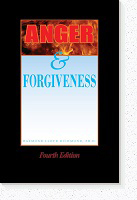 Anger and
Forgiveness Anger and
Forgiveness
(Fourth Edition)
Shows how to turn the emotional wounds
of daily life into psychological growth. Available as a paperback book or
as an e-book.
More
information |
Gratitude
|
Has this web page been helpful? Then please help support this
website in gratitude, as a “down-payment” on the success of your
hopes and dreams!
|

Notes:
1.
Lacan, Jacques. “The subversion of the subject and the dialectic of
desire in the Freudian unconscious.” In Écrits: A selection
(Alan Sheridan, Trans.). New York: W. W. Norton, 1977, pp. 310-311:
“Any statement of authority has
no other guarantee than its very enunciation, and it is pointless for it
to seek it in another signifier, which could not appear outside this locus
in any way. Which is what I mean when I say that no metalanguage can be spoken,
or, more aphoristically, that there is no Other of the
Other.”
2. Lacan, at least,
did not attempt to subvert religion like Freud, nor did he try to
“psychologize” religion like Jung and Rank. Lacan simply respected
the fact that psychoanalysis could say nothing meaningful about religion.
See “The subversion of the subject and the dialectic of desire in the
Freudian unconscious.” In Écrits: A selection (Alan Sheridan,
Trans.). New York: W. W. Norton, 1977, p. 316:
“We [psychoanalysts] are answerable
to no ultimate truth; we are neither for nor against any particular
religion.”
3. “What about
national defense?” you might ask. Well, I’m not about to try to
tinker with national defense strategy, whether through commentary or through
protest. Psychology concerns the individual, and love is an individual act.
No government can order you to love, and no government can order you to hate.
And for that matter, peace is also a matter of individual will, not of politics.
All politics today has forsaken real love and is lost in the no-man’s
land of competition, hatred, and vengeance. So ultimately you, as an individual,
have to live—and die—with the destiny of your own conscience and
with whatever peace you bring into the world through your refusal to
hate.
Additional
Resources
For more about the nature of truth and lying,
see:
Lacan, Jacques. The Four Fundamental Concepts of Psycho-Analysis
(Jacques-Alain Miller, Ed.; Alan Sheridan, Trans.). New York: W. W. Norton
& Company, 1981.
Bioterrorism:
Trauma
and PTSD from the present website.
Child and Adolescent Mental
Health:
Family Therapy (from the present website;
see especially the section on “The Loss of Innocence”)
Related pages within A Guide to Psychology
and its Practice:
Anger: Insult,
Revenge, and Forgiveness
Death—and the Seduction
of Despair
Family Therapy
Fear
Forgiveness
Identity and
Loneliness
The Limits of
Psychology
Personality
Questions and Answers
about Psychotherapy
Sexuality—and
Love
Spirituality and
Psychology
Spiritual
Healing
Trauma and PTSD
The Unconscious
CONTACT ME
INDEX of all subjects
on this website
SEARCH this
website |
|
A Guide
to Psychology and its Practice |
www.GuideToPsychology.com |
|
Copyright © 1997-2026 Raymond
Lloyd Richmond, Ph.D. All rights reserved.
San Francisco |
|
All material on this website is
copyrighted. You may copy or print selections for your private, personal
use only.
Any other reproduction or distribution without my
permission is prohibited. |
|
|